By Tafara Pande
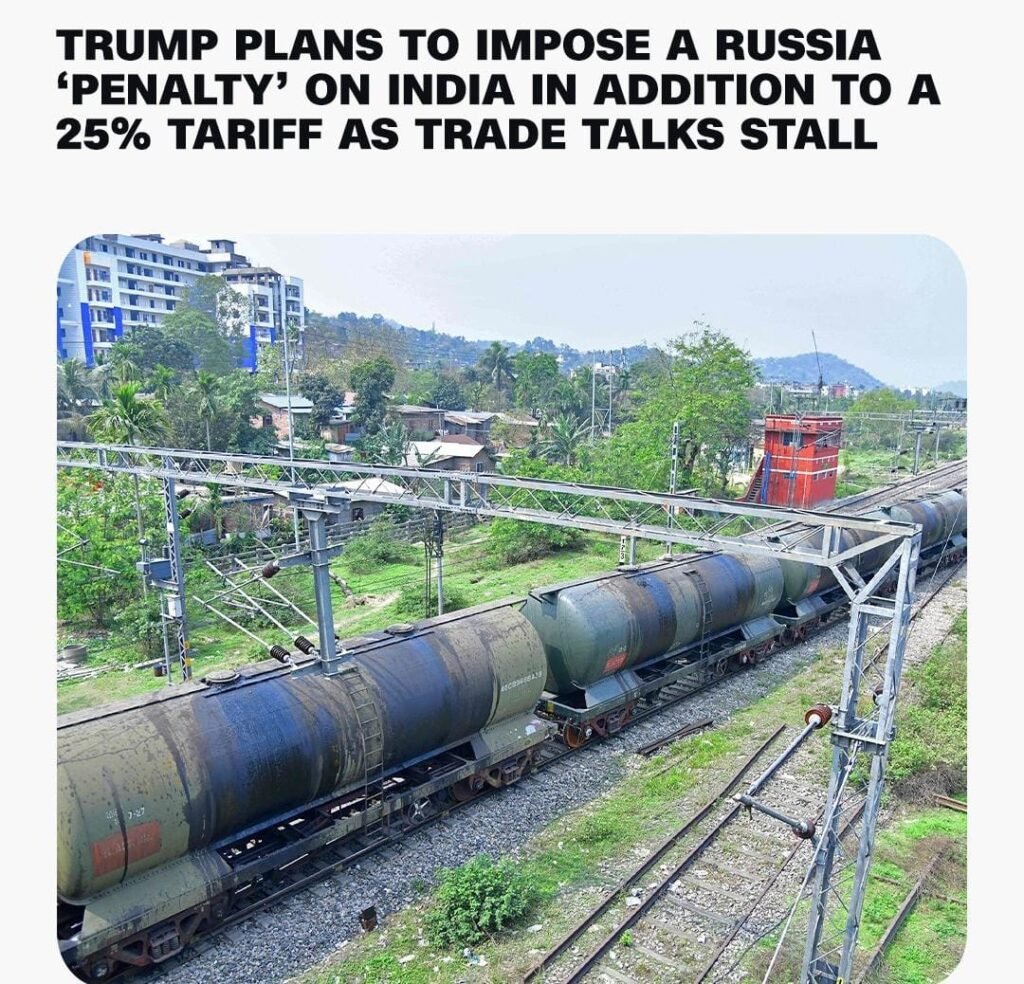
Washington: The trade relationship between the United States and India is bracing for a seismic jolt after President Donald Trump announced a sweeping 25 percent tariff on Indian goods, effective August 1. The move, delivered in typical Trump fashion through a fiery Truth Social post, was paired with a stark warning that India could face an additional “penalty” for what he described as dangerous overreliance on Russian oil and military equipment.
The timing could not be more delicate. For months, diplomats in Washington and New Delhi have been quietly negotiating a trade pact aimed at smoothing tensions and boosting cooperation. Yet with one proclamation, Trump has unsettled those talks, replacing optimism with uncertainty. He acknowledged India as “a friend,” but in the same breath accused it of maintaining exorbitant tariffs and non-tariff barriers that disadvantage American businesses. His harshest words, however, were reserved for India’s continued purchases of Russian crude and weaponry, a sore point for the U.S. since the war in Ukraine intensified.
Financial markets reacted immediately. The Indian rupee slipped against the dollar, while analysts warned that industries from textiles and pharmaceuticals to gems and automobiles could see their competitiveness in American markets erode. Last year alone, India’s trade surplus with the U.S. reached $45.7 billion, a figure Trump has repeatedly cited as unacceptable. With tariffs looming, the delicate balance of one of the world’s most important economic relationships is under fresh strain.
In New Delhi, the announcement triggered swift political reactions. The opposition Congress Party called Trump’s move a “wrong step” and urged Prime Minister Narendra Modi’s administration to respond with resolve. Within the ruling Bharatiya Janata Party, leaders struck a more cautious tone, calling the tariffs “unfortunate” but warning against knee-jerk retaliation until the government issues its official stance. Behind closed doors, senior officials are reportedly weighing how to navigate the fallout without derailing the broader strategic partnership with Washington.
Trump’s move is also being viewed through the lens of a broader geopolitical push. Critics argue the decision echoes the recently passed Sanctioning Russia Act of 2025, a law designed to punish countries that continue to deepen trade in Russian oil and arms. Some analysts suggest the White House is using India as a test case for how far it can extend its secondary sanctions while still keeping major partners engaged.
Yet despite the turbulence, the door to dialogue is not fully closed. U.S. trade envoys are still expected in New Delhi in early August, and some observers believe Trump’s tariff threat may be a high-stakes negotiating tactic rather than a final position. Whether this gambit results in a breakthrough deal or a bruising trade standoff may become clear in the coming weeks.
For now, the stakes could hardly be higher. India, with its burgeoning economy and growing global clout, finds itself walking a tightrope, balancing its historic ties with Moscow against the increasingly unpredictable demands of Washington. Trump, meanwhile, appears determined to show that when it comes to trade and foreign policy, his second administration is not in the mood for half measures.